


Inis Patraic, Isle of Man
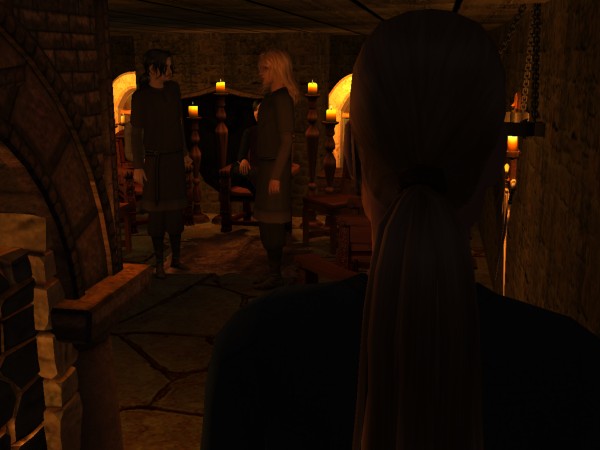
“Oh, lovely,” Kormak grumbled. “Leki’s here. At last we can get started.”
Lagman leaned forward in his chair and smirked up at him. “Now, now, I’m certain he came as soon as he could put his pants back on.”
Harald greeted them both with a scowl as he strolled into Whitehand’s hall, one whipcrack glance to either side of Ulf’s blond head.
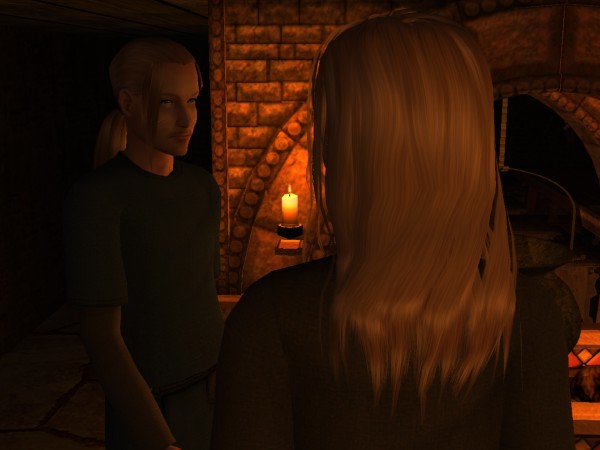
His glare softened as it settled on Ulf himself. What was he doing here?
Ulf lowered his head in a nod that bordered on a bow. He murmured, “Captain.”
Harald replied with a stiff nod.
Over a decade before, Ulf Thorfinnsson had captained the first warship on which Harald—young, fresh-faced, unscarred, naive—had ever served.
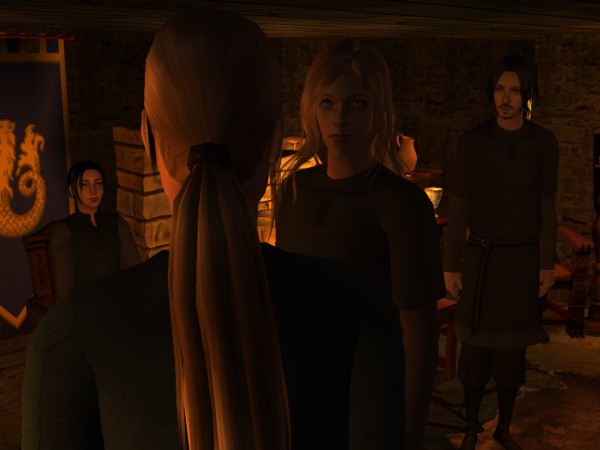
Now Ulf still had his old warship, and Harald possessed a dozen. Ulf lay down low in the pile of men that Harald had climbed.
Harald spotted the pitcher and headed towards it, nodding at young Prince Harald and at Whitehand himself as he went by. “What’s going on?” he grumbled. He tossed his head at Lagman and added, “I came as soon as I was sent for. And I did have my pants on.”
“My condolences,” Lagman said. “Better luck tomorrow night.”
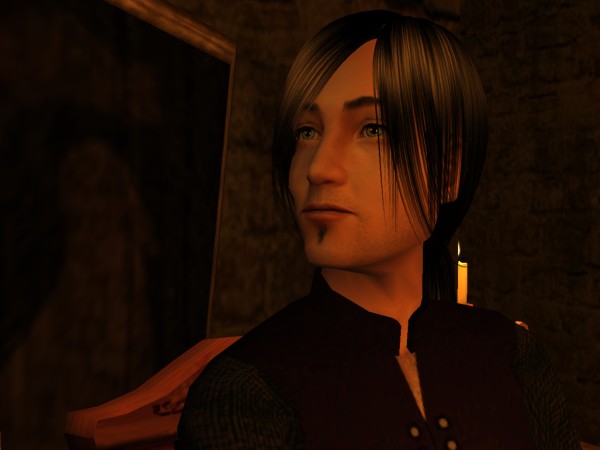
Harald picked up the pitcher and an empty cup, thinking a reply he dared not utter before the young man’s father.
“Ulf was just telling us the news,” Whitehand said.
“What did I miss?”
Kormak sidled closer. “He was merely whetting our appetite with the bad news while we waited for you.”
Harald tasted the wine to give himself an opportunity to hide his face behind his cup, but he eyed Kormak over the rim. The smarmy little Islander looked just on the brink of chortling.
He swallowed and muttered, “Can we just skip straight to the good news?”
And your joke, he added in his head, whatever it is.
Kormak smiled. “I meant whet our appetite in preparation for the truly execrable news.”
Harald swished a mouthful of wine over his teeth. Kormak shrewdly took a step back out of spitting range.
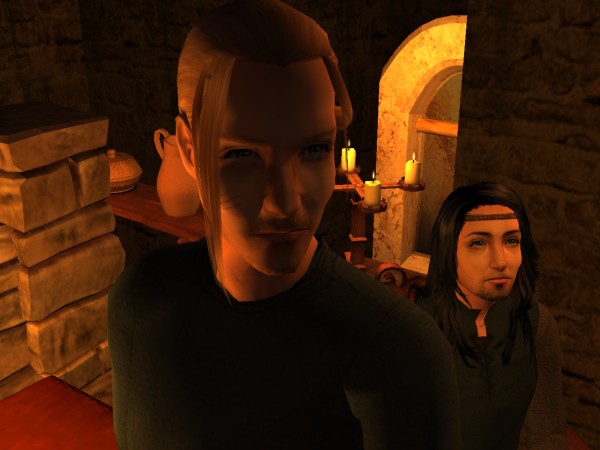
“Say it again for Harald,” Whitehand prompted.
Ulf sighed and nodded. “It’s just that Cu Mara of Mull seems to have delivered five warships to Ramsaa…”
“What?” Harald slammed down his cup and turned to Kormak.
Kormak stiffened.
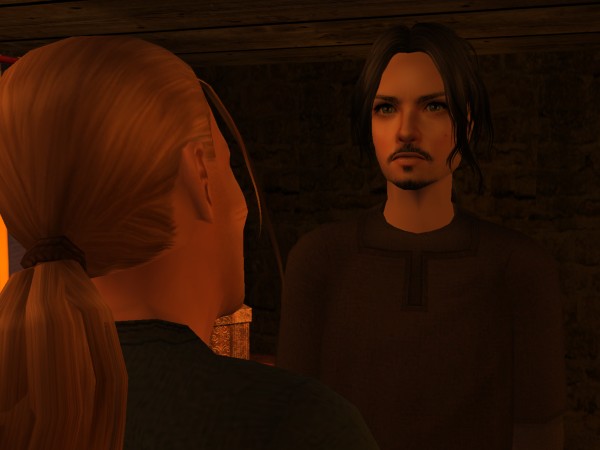
“What in thunder? You’re supposed to be on top of that!”
“I cannot be everywhere at once.”
“Then be where you can do some good! What in thunder are you still doing here, anyway? Don’t you ever go home? Those ships had to sail past Islay to get to Ramsaa! You might have stopped them!”
Whitehand interrupted, “Gentlemen…”
Kormak sent him an apologetic half-smile over Harald’s shoulder, but its hint of long-suffering made it seem an apology for Harald’s behavior rather than his own.
Harald seethed and crackled with insults he dared not speak aloud. No matter how high he climbed, there were men he would never be able to stack on his pile: the sixteen hereditary Lords of Man, and the sixteen Lords of the Isles. Men like this ass-licking sycophant, whose life’s greatest exploit had consisted of flopping out into the world from between the thighs of some other lord’s wife, and so on forever.
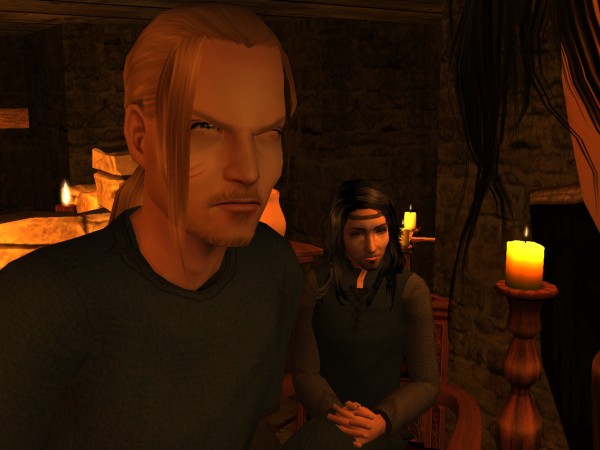
Harald had entered the world by way of a dockside whore, and had begun clawing his way up from there. He reckoned men’s worth not by how high they stood, but by how far they had climbed.
Lagman said breezily, “It is perhaps not quite Kormak’s fault if Diarmait’s father-in-law lights upon the novel idea of sending aid to his daughter and son.”
“No! In fact it’s so damned obvious that he should have been up north to deal with the possibility!”
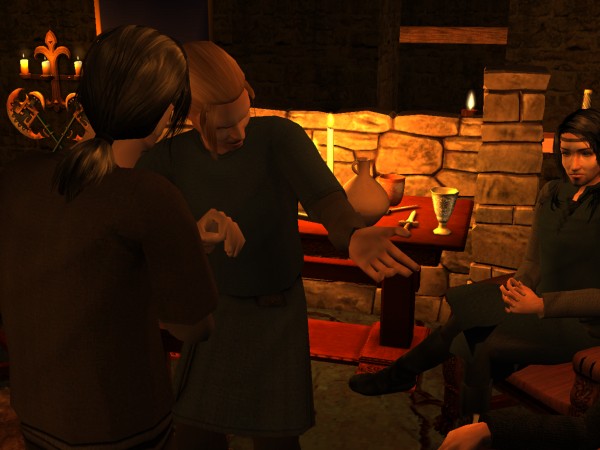
He stabbed Kormak in the shoulder with a fingertip, and Kormak shoved him off, snarling, “Don’t touch me again!”
Whitehand sighed. “Gentlemen…”
Harald spun around to address him first and Lagman second. “It’s so damned obvious that I already warned you about it last summer! Brass Dog takes a little sightseeing tour of the Southern Isles, and a month later—quite coincidentally!—we hear that Cu Mara’s daughter is betrothed to Old Aed’s son! And you know Brass Dog is in balls-deep with that family!”
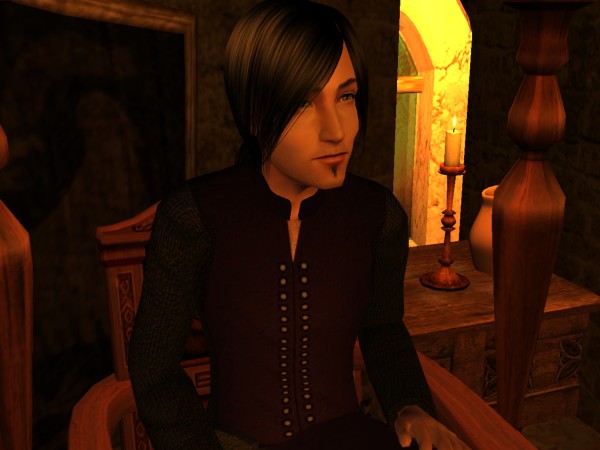
Lagman asked, “Would you have us believe that Eirik had everything planned last summer? Down to the hour of the tide perhaps? Recollect that Eirik did not get the better of that battle. We aren’t even certain he survived it.”
“Maybe he didn’t count on Diarmait’s treachery in the end, but that doesn’t mean he didn’t count on something like this! And Diarmait too! And I warned you!” he added, returning to Whitehand.
“Yes, Harald, I recall that you did.”
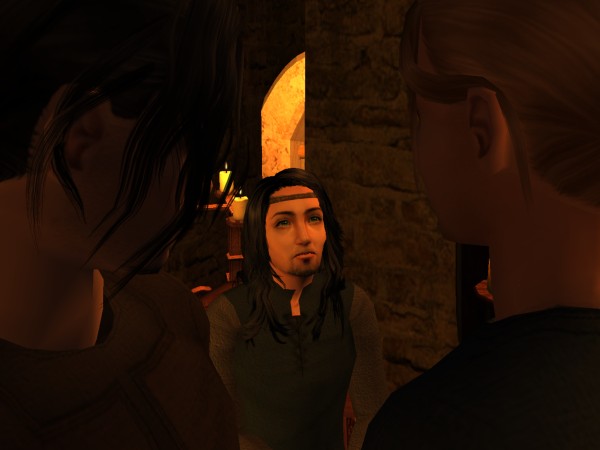
“So!” Harald’s face flushed with the intoxicating and too-rare sense of having his wisdom recognized in this rat-ridden court. He picked up his cup and emptied it in one breath, multiplying his exultation with a truly intoxicating bellyful of wine.
He put down his cup and turned back to Kormak, hoping to see some hint of acknowledgment, or even wounded dignity. Kormak smiled.
“So!” Harald said. “Let’s have the execrable news!”
Kormak turned his head aside and sniffed, probably feigning surprise that such human flotsam as Harald could even pronounce a word of so many syllables.
Harald stepped sideways to put himself back before Kormak’s insolent face.
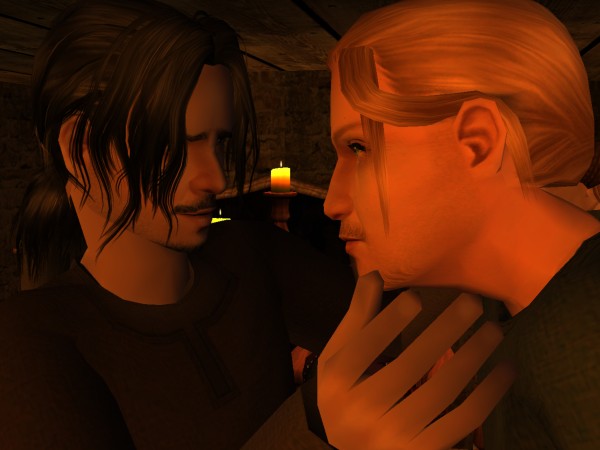
“As you predicted, all this easily avoidable trouble makes me hungry for something more substantial!”
Lacking the hereditary dignity of a nobleman, Harald was obliged to shout and storm and impose himself by being the loudest, surliest, least ignorable man in the room. This was a trick soft-spoken Ulf had never learned. It had taken soft-spoken Harald thirty years of studied brashness.
Now he had the floor, and no one spoke to interrupt him. Kormak’s face was blank. Ulf shrank back towards young Harald in his chair, and Lagman looked at his father. If Whitehand was annoyed, he showed it only in the rapid kicking of his crossed leg.
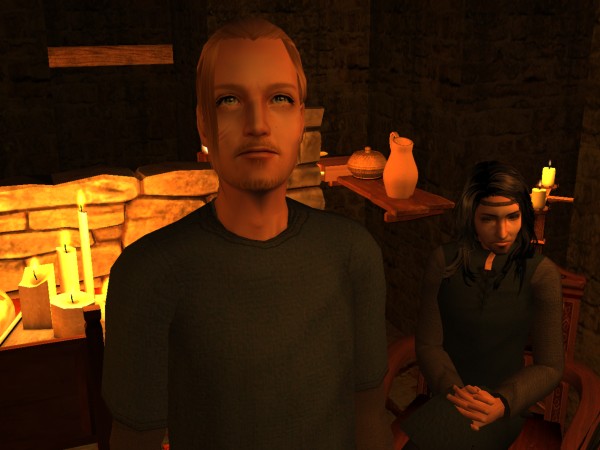
Harald decided he had done his part. No one in this room tonight would forget that he had been there, and after years of patient repetition of the treatment, they now had such a habit of him that they could not—as Kormak had inadvertently admitted—think of starting without him.
He clomped over to an empty chair and flopped down into the seat. “Is it about Eirik?” he prompted. His part was played. Now he could watch and listen.
Ulf settled himself gingerly on the edge of a chair opposite.
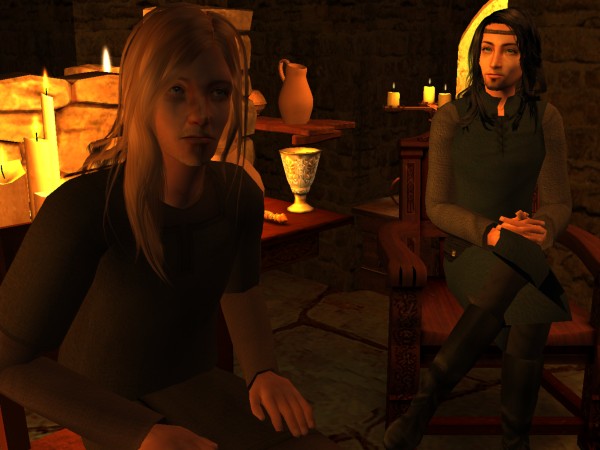
“No,” he said, “it’s about Eyvind and his party.” He started as he remembered his true audience, and he bowed in his chair to Whitehand. “You haven’t heard anything, sire?”
“We have had news neither of him nor from him,” Whitehand said. His kicking foot slowed. His calm was more chilling than reassuring.
Eyvind Olafsson and his men had left a week earlier, traveling overland on foot to the fort at Primrose Hill. There was little danger of the fort being taken—its ramparts were formed of the rocky slopes themselves—but it would lie on Diarmait’s path if he approached Saint Patrick’s Isle overland. More urgently, it seemed the likeliest place of refuge for people who had fled Ramsaa, Maughold’s Head, Bride’s Hill, and any other settlements that had given themselves up to the Gaels since the latest news had arrived. After what had taken place at Ramsaa, there had to be refugees. There had to be. Else there were no survivors.
Ulf swallowed and glanced longingly at the pitcher. “I know what happened to them.”
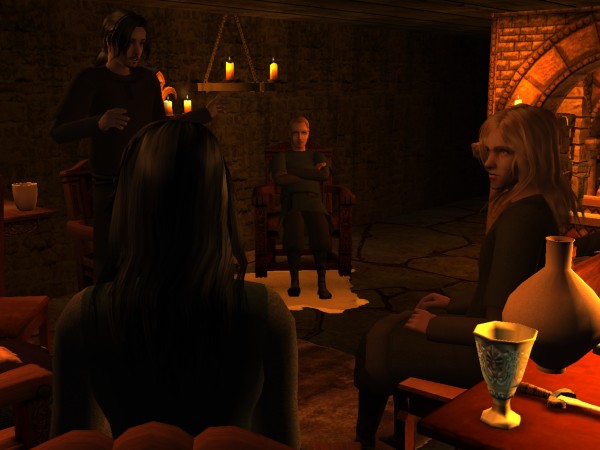
Lagman asked, “What happened to them?”
Ulf wiped his hands on his pant legs. He was not accustomed to stone-walled halls, to sitting, to speaking. Harald’s scarred heart softened with pity for his old captain. Ulf had never learned.
“Yes, my lord. Some of them, anyway. There are twelve bodies hanging from the ramparts of Primrose Hill. One of them is Eyvind’s.”
Whitehand’s foot stopped.
Harald thought of Eyvind’s wife and his little fair-haired daughter. Suddenly it felt wrong to be slouching deep in his chair, but no one else moved. The silence of the hall deepened until Harald thought he could hear a faint, erratic hum, like the voices of ghosts stumbling one over another in their despair of being heard.
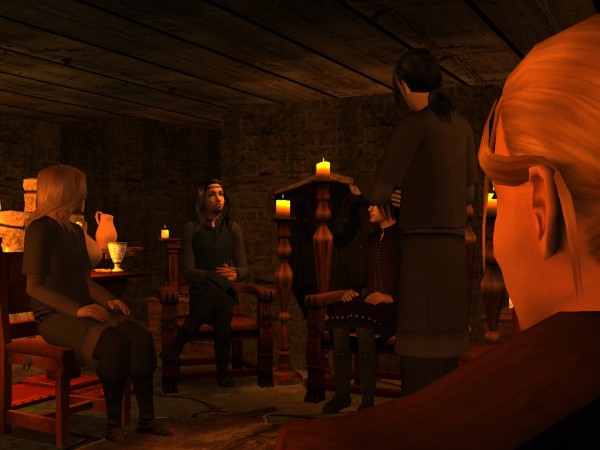
Then Kormak lifted a hand and crossed himself, and from the moment Harald understood “in the name of the Father,” the hum coalesced into another of Kormak’s ordinary maundering Gaelic prayers.
Once Kormak had finished, Lagman asked, “What happened to the rest of them?”
“I don’t know about all of them,” Ulf said. “One of them… Sigmund is his name…”
He looked at his lap with an intensity usually reserved for peering into the depths of wells, or staring through dense fog for signs of land.
“He had his eyes cut out with a hot knife. But he was one of the first they did it to, so he didn’t see what they did to the others. He only knows it… hurt.”
Whitehand’s foot began kicking again, slowly.
“A shepherd found him in the hills and brought him to my house, and he told me what happened. The twelve they killed right off, they were the men born in Norway. Then they went after the Norsemen born here. Sigmund was one of ’em.”
He lifted his head long enough to give Whitehand a look worthy of a kicked dog. Whitehand’s foot went on kicking.
“He didn’t know what became of the ones who were Gaels, sire.”
“I see.”
“He said there were men waiting for them when they were still coming down the Solaby Valley. Ambushed.”
Lagman glanced at his father, but Whitehand merely blinked thoughtfully. Lagman turned back to Ulf. “How did they even see them coming? They were on foot, they were supposed to be in the woods, avoiding the farms…”
“Well,” Ulf sighed, “they told the men the horn of Mael na mBo had sounded three times to warn them.”
Harald sat up. “It’s a fucking drinking horn!”
Ulf shrugged. “It’s magic.”
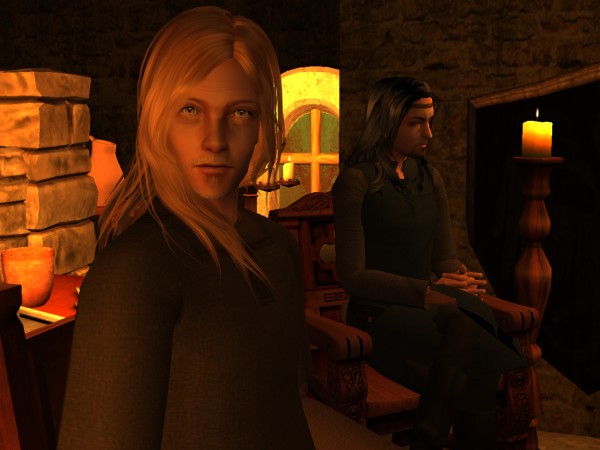
“It was once a war horn,” Whitehand explained.
“And so what?” Harald demanded. “It still remembers how to blow? It’s fucking magic!” he sneered.
He crossed his arms again and flopped back into his chair. To his surprise, Lagman spoke up almost in agreement.
“Forget the magic nonsense—this means Diarmait’s most likely behind it. If he hasn’t taken Primrose Hill, then his men have.”
“Somebody still had to warn Diarmait,” Harald grumbled, “so he could toot his fucking horn.”
“Who could have done that?” Kormak asked. “Almost no one knew they were coming. And who would have guessed they would have gone by way of the Solaby?”
Whitehand’s swinging foot swung a little higher. “Yes, who indeed?”
“Who was here that night?” Lagman mused. “Only we here, I believe—minus Ulf and plus Eyvind of course. And Mother was here, too.”
Harald said, “Muiredach of Mare’s Head was here.” He seldom forgot who was in a room, so occupied was he with his place in it.
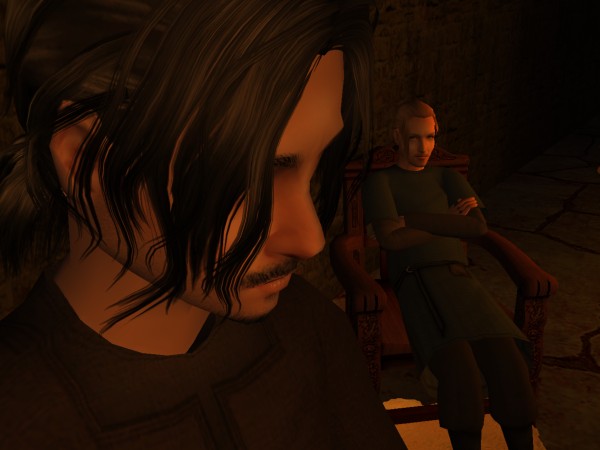
Kormak turned his head far enough to peer down at him with one eye, as though he were not worthy of two.
Neither of them noticed Whitehand slowly uncrossing his legs, but they both jerked to attention when his boot slammed onto the floor.
“Yes!” he shouted. “Muiredach was here!”
Kormak spluttered, “Sire?”
Whitehand pushed himself up and strode forth. After his first explosion, his steps were muffled to a catlike silence by the rug. He looked not to Kormak but to Harald.
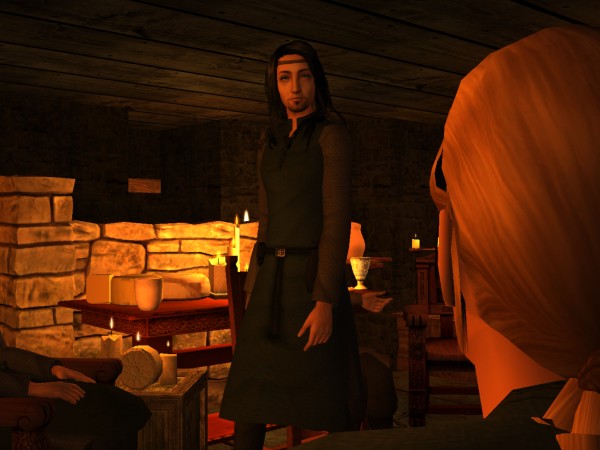
“Harald, I’m sending all your ships, all your men to Mare’s Head.”
Unintentionally echoing Kormak, Harald whispered, “Sire?”
“You shouldn’t have much difficulty taking it. Its landward defenses are sparse. You’ll want to set to work strengthening them as soon as you arrive.”
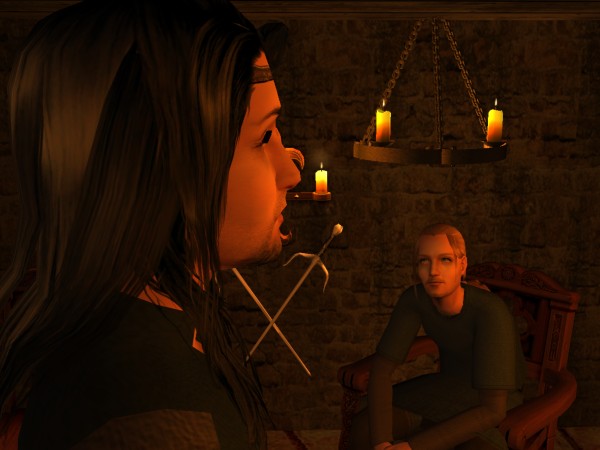
Harald knew the fort was poorly defended; he had visited its ancient hall once and thought it enough for one lifetime. Nothing killed a man’s appetite like the hungry stare of jawless human skulls nailed up trophy-like along one wall.
He knew its true name, too; Mare’s Head was only its cozy name in Norse. The Gaels called it the Hill of the Dead—and not, he was told, for the skulls.
Kormak made a short, whinnying laugh. “Taking it? That fort is ours.”
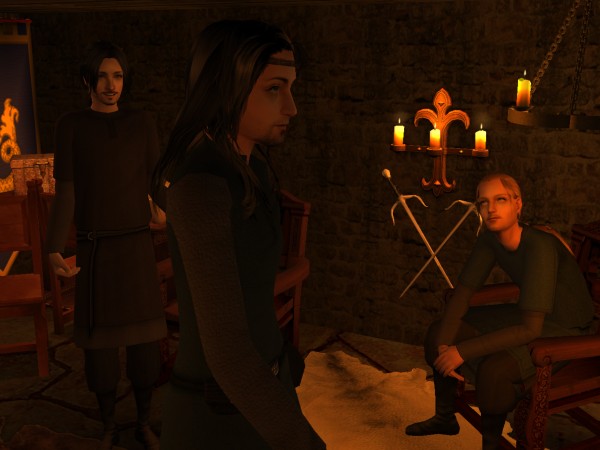
Whitehand ignored him. “All I ask is Muiredach’s head.”
Harald’s breath caught in his chest. He looked at Lagman. Lagman appeared as alarmed as he.
Kormak wailed, “Muiredach’s head? Muiredach’s not your enemy!”
Whitehand spun about and shouted, “Somebody had to warn Diarmait that Eyvind was coming! Surely it was not someone presently in this room! Was it?”
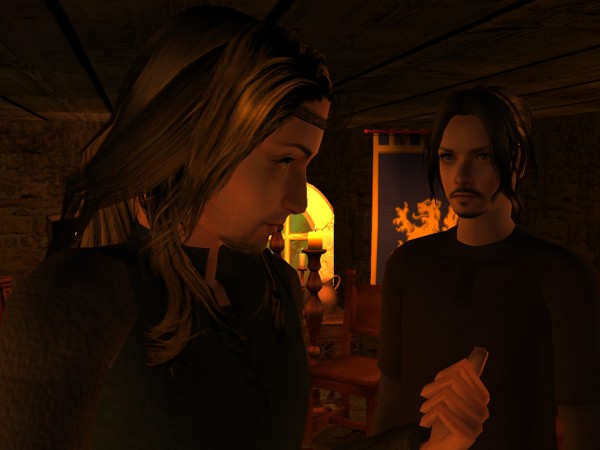
Kormak shook his head slightly.
Harald looked to Ulf. The chapped face of his old captain was pale as death—pale as a bodiless head lifted by the hair to drain.
Whitehand turned back onto his sauntering path towards the fire. “And I do doubt it was my wife.” He glanced aside at Harald. “Slay his sons, his brothers, and his brothers’ sons. But give them a Christian burial—I shall have no bodies hanging from the ramparts of my forts.”
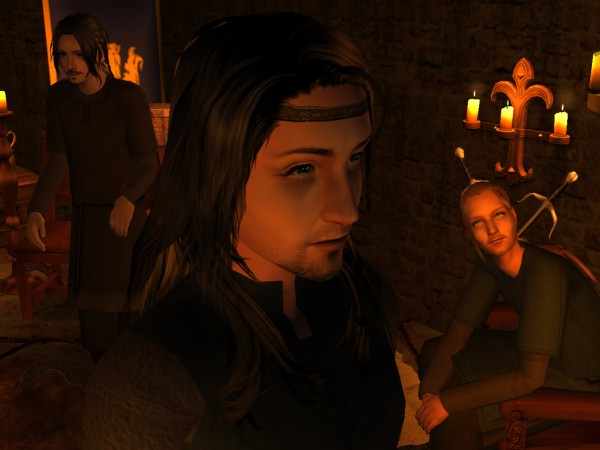
Kormak howled, “You cannot kill his entire family!”
“I can indeed!” Whitehand shouted. Unlike Ulf, he did have the habit of stone-walled halls, and his voice thundered. “I might have done so six years ago, but I did not! No, by God’s name! I let them live, every one! Because I am a king, not a conqueror! Because they are my people, not my enemies! There was Muirgius son of Demmain on his knees before me—do you remember, Ulf? On his knees waiting to be killed, begging me to spare his son—and I told him I would slay no man who kneeled to me. And for what? So that he could go over to Diarmait, and slay women and girls and babies!”
“Then send Harald to Ramsaa to execute Muirgius,” Kormak pleaded. “We don’t know for certain it was Muiredach who betrayed them. It might have been one of Eyvind’s own men.”
“Then Muiredach’s family will die for some other man’s treachery,” Whitehand barked, “and some other man will have to live with the guilt of that.” He looked back to Harald, and a chill calm returned to his voice. “Let it be known that I shall henceforth exterminate a chieftain’s bloodline for every such act of savagery, and put a Norse-born man of mine in his place—”
Kormak leapt to the King’s side.
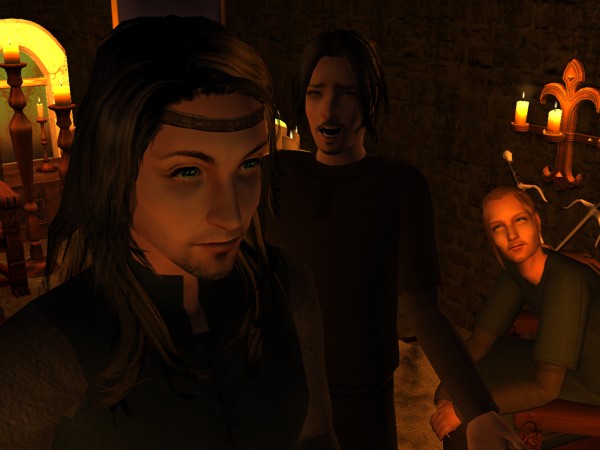
“Leki? Leki? You’re going to wipe out a family that has seated at Mare’s Head since pagan times—since before your Norsemen ever learned how to lash five boards together and float!—and replace them with this scab-faced son of a whore? He doesn’t even know his father’s name!”
Harald could not see Whitehand’s face from where he sat, but his body held its customary languorous lines. His gloveless fingers, however, were curved into a clawlike stiffness, and his hands might even have been trembling. Harald clasped his own hands together so they would not.
“Harald,” Whitehand murmured in a voice that was entirely calm. “You shall take Muiredach’s head with your own axe. And afterwards, I want you to take a good look at the edge. If his blood be the same color as yours, you are named the new Lord of Mare’s Head.”
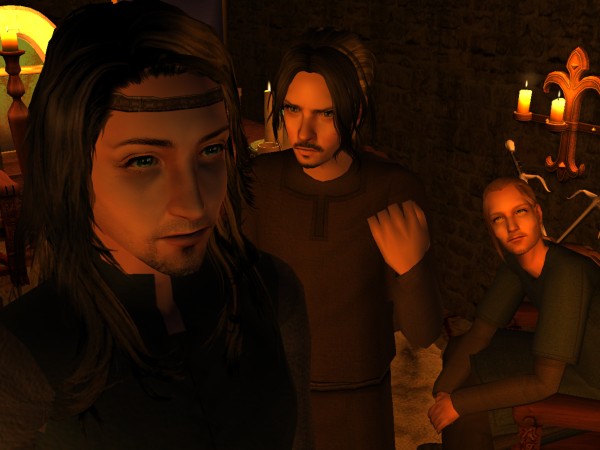
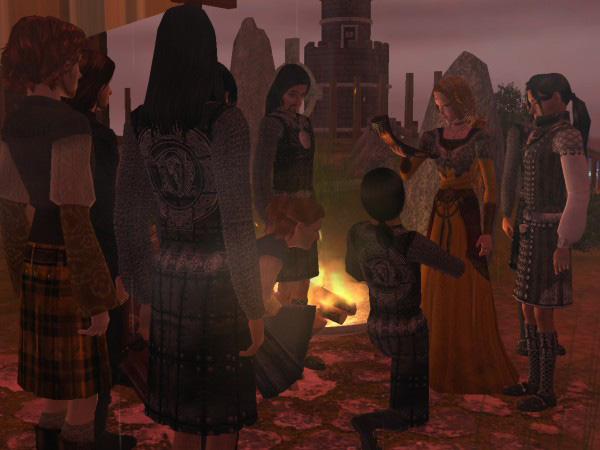


 Watch as Whitehand erases all evidence, photographic and otherwise, of his former friends and allies.


 Chapters
I don't have time to read right now, but I just wanted to say:
LOVELY banner!